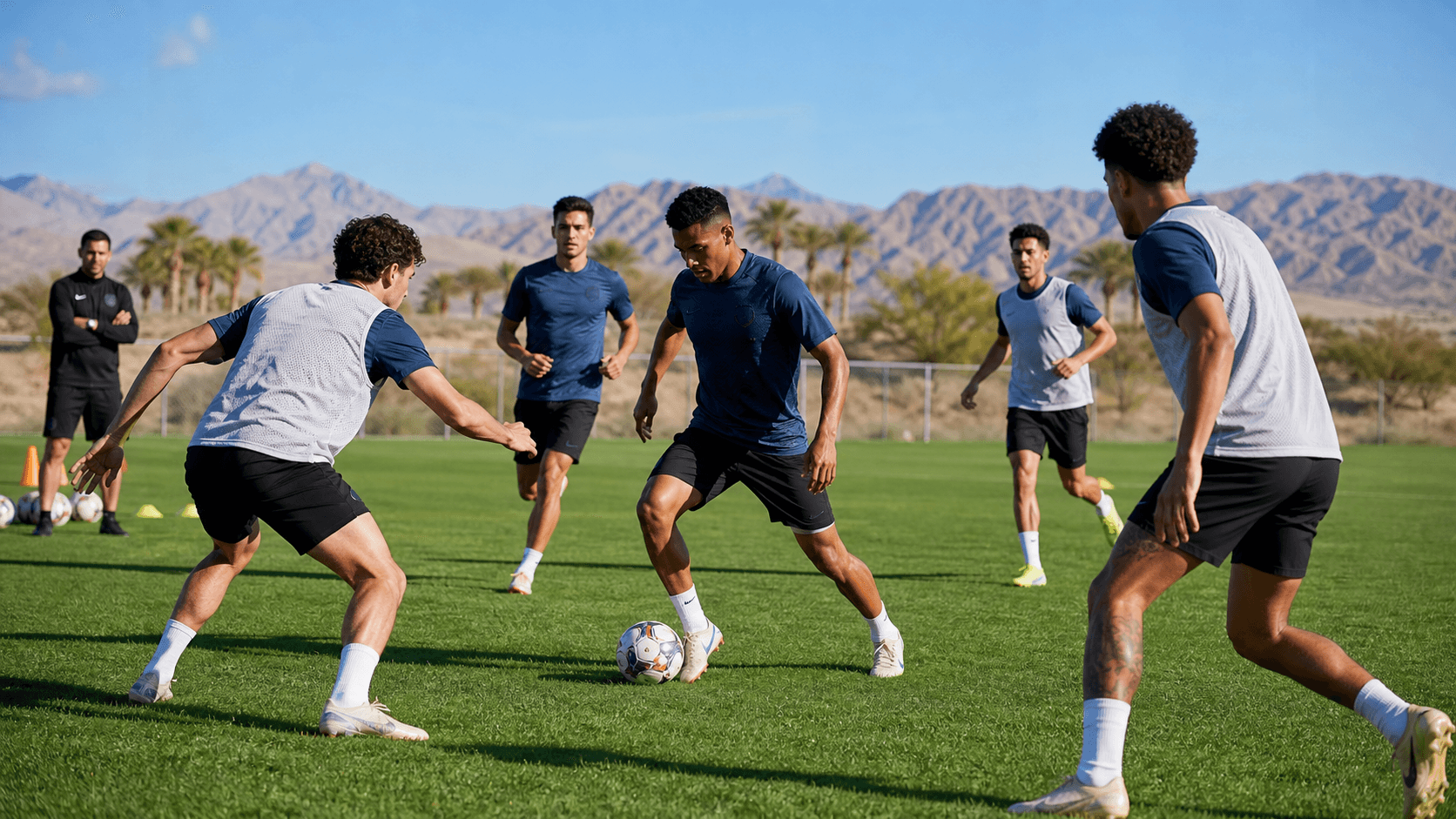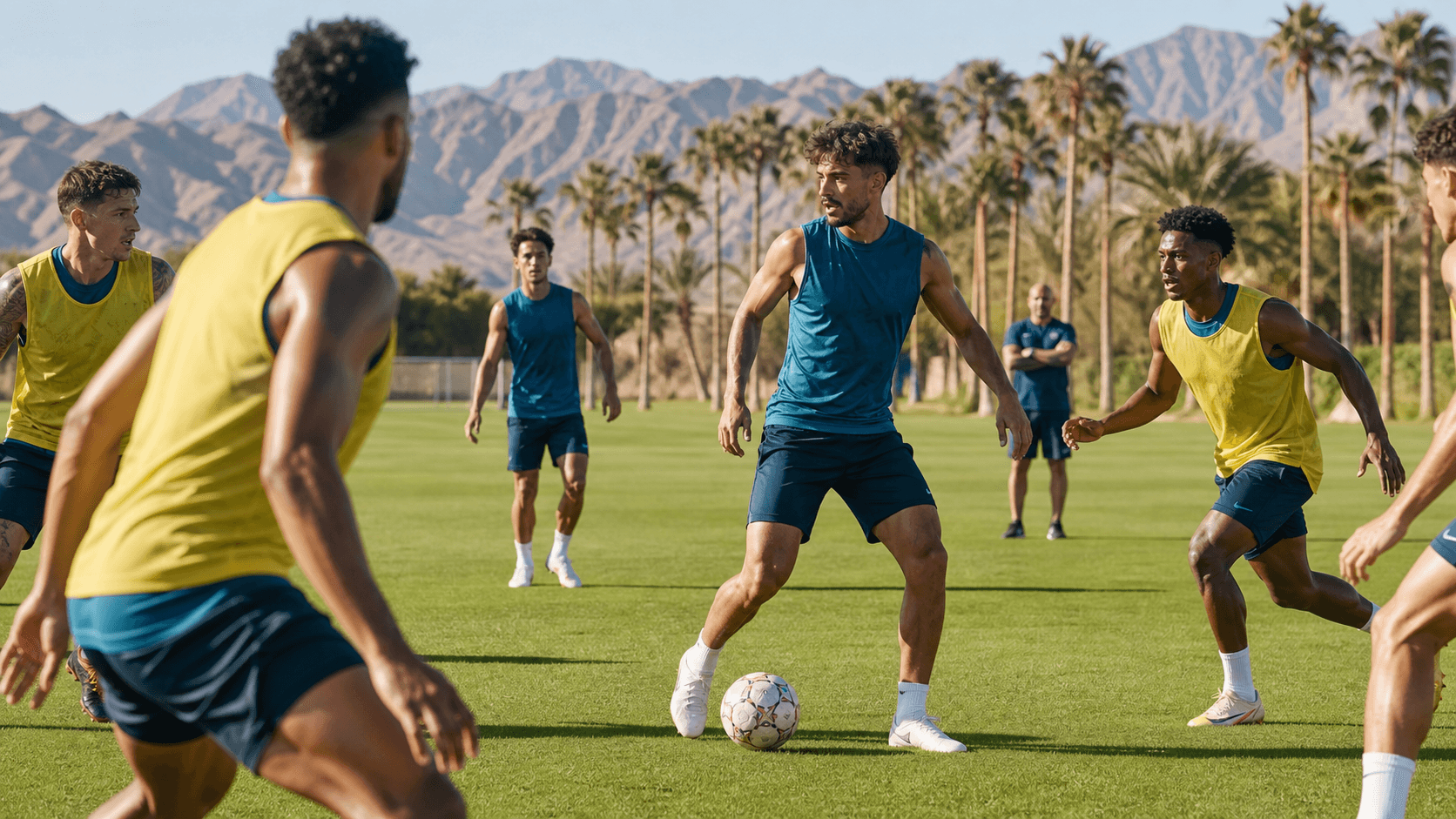
Summer is a valuable development window for young soccer players. It can be more than a way to keep your child active between school years. The strongest summer soccer camps in Las Vegas help players connect ball skills with the fast decisions they must make during a real match.
At Las Vegas Soccer Camps, powered by European Football Training (EFT), we believe a player should learn more than how to complete a move. They should understand when to use it, why it works, and what to do when the game changes around them.
Game Play Turns Camp Time Into Lasting Learning
Parents often see camps promoted around drills, touches, and scrimmages. Those things can all have a place, but repeating a move without pressure or a purpose does not fully prepare a player for match day.
Soccer is full of changing pictures. A player may receive the ball with an opponent closing in, a teammate making a run, and limited space to turn. In that moment, good technique matters, but so does awareness. The player has to recognize what is happening and choose a solution quickly.
Game-based learning creates practice environments that feel closer to soccer itself. Rather than telling players every answer, we set up challenges that help them see and solve problems. These activities may include:
- Small-sided games with frequent touches and decisions
- Directional games with goals, targets, or end zones
- Changing player numbers, such as an attacking advantage
- Activities that require quick transitions from attack to defense
Technical coaching remains an important part of player development. Game-based learning gives that technique a purpose. Our goal is to guide players from technical mastery to tactical awareness, game application, and competition.
Why Drills Alone Cannot Build Match Intelligence
Isolated drills can help players become more comfortable with ball control, passing mechanics, shooting technique, or a change of direction. Repetition gives young players a chance to feel the movement and build confidence with the ball.
Still, cones do not close down space. A teammate in a line drill does not move unpredictably. Most importantly, a simple drill may not ask a player to make a real decision.
During a match, players need to scan before receiving the ball. They must decide whether to turn, protect possession, pass quickly, dribble into space, or play forward. If they lose the ball, they need to react again, often right away.
That is why we see drills as a starting point, not the finish line. A passing activity, for example, can begin with clean technique and accurate weight on the ball. From there, we can move into a possession game, then a directional game where players must recognize when to keep the ball, support a teammate, or attack space.
European football development often reflects this approach. Training environments in countries such as Spain, Germany, the Netherlands, Portugal, and Croatia commonly place players in age-appropriate activities that resemble the demands of the game. We do not try to copy a professional academy session. Instead, we apply sound player-development ideas in a way that fits young players and their current level.
How Game-Based Sessions Teach the When and Why
A well-planned session should build step by step. First, we introduce or review the technique. That may be receiving with the correct surface of the foot, passing with accuracy, dribbling with control, or finishing with composure.
Next, we add a decision. Where is the open space? Is there pressure behind the player? Does the team have more attackers than defenders? Which teammate is available?
Small-sided games are especially useful because each player becomes more involved. With fewer players on the field, children often have more touches, more chances to defend, and more moments to communicate. Coaches can change the field size, player numbers, scoring rules, or targets to bring out a specific lesson.
For instance, a 3v3 game can help players understand support, spacing, and quick transitions. A 4v3 situation can show attacking players how to recognize an advantage while helping defenders learn to delay play and protect central space. A game with end zones may teach players when to play forward and when keeping possession is the better choice.
Coaching questions matter here. Instead of only saying that a pass was wrong, we might ask what the player saw before receiving the ball or where support was available. That conversation helps players think independently instead of waiting for constant instructions from the sideline.
Small Groups Create More Meaningful Reps
Group size has a direct effect on how much attention each player receives. In a large camp group, a child may spend too much time waiting, following a generic activity, or working through challenges that are too easy or too difficult.
Small-group training gives us a clearer view of each player's movement, confidence, technique, and decision-making habits. It also allows us to adjust the challenge without taking away the game-based nature of the activity.
A newer player may need more time on the ball, simpler choices, and encouragement to explore. A more experienced player may benefit from tighter spaces, faster transitions, added pressure, or more complex tactical problems. The game can stay the same while the demands change for the player.
Quality game-based coaching is not an unstructured scrimmage where adults simply roll out a ball. It involves careful organization, a clear learning purpose, close observation, and feedback at the right moments. We want players to be active, challenged, and supported without being told every move.
Choosing Summer Soccer Camps in Las Vegas with Purpose
When comparing summer soccer camps in Las Vegas, we recommend looking beyond a schedule filled with drills and games. Ask how those activities connect and whether coaches adapt the experience to the players in front of them.
Useful questions include:
- How are technical skills taught, then applied in game situations?
- How much time do players spend in small-sided games?
- How are newer and more advanced players challenged differently?
- What kind of feedback do coaches provide during activities?
- Is the focus on winning camp games or building better habits over time?
The best fit depends on your child's current needs. A player who needs confidence may benefit from frequent involvement in a supportive small-group setting. A player preparing for a more competitive season may need faster decisions, better positioning, and more pressure around the ball.
Summer can be a good time to work on those needs without the immediate focus of weekend results. It can also connect naturally with school-break camps and clinics, small-group training, private training, or European training experiences when those options fit a player's goals.
Plan a Summer Built Around Better Game Understanding
A meaningful camp experience should give players more than tired legs and a collection of drills. They should return to their teams with stronger habits on the ball, better awareness, more confidence, and a clearer idea of how to solve problems in a game.
Look for a program that challenges your child at the right level and treats development as a process. Better soccer decisions take practice, reflection, and realistic game moments, but those lessons can stay with a player long after summer ends.
Build Confidence Through Real Game Decisions
At Las Vegas Soccer Camps, we help players connect technical skills to the choices they need to make during realistic match situations. Explore our summer soccer camps in Las Vegas to find a development-focused environment built around age, level, and individual needs. If you have questions about the right fit for your player, contact us and our team will be glad to help.