Better Decisions Begin Before Match Day
Strong team decisions start with individual development. When a player can receive, control, scan, and act with confidence, they have a better chance of making useful choices in a fast match. That might mean finding an open teammate, protecting the ball when pressure arrives, or recognizing that a simple pass is the best option.
Parents sometimes see individual work as separate from team play. We see it differently. Individual soccer training in Las Vegas should prepare players to help their team, not just perform moves around cones. At Las Vegas Soccer Camps, through European Football Training (EFT), we build skills around realistic soccer situations and teach players not only what to do, but when and why to do it.
A player's choices during competition often depend on what they can do before the ball reaches them. Technical mastery, tactical awareness, game understanding, and confidence all work together. As those areas grow, players can make smarter choices in possession, defend with more purpose, support teammates, and adjust when the match changes.
Technique Gives Players More Time
A clean first touch can change an entire play. If a player struggles to settle the ball, their attention goes straight to fixing the touch. If they can control it smoothly, they have time to lift their head, notice pressure, and choose the next action.
That is why technical training and decision-making belong together. We help players build reliable skills first, then place those skills into situations where they must read the game. A good technique gives a player more options, while an inconsistent technique can make even a simple decision feel rushed.
Individual skills that shape team decisions include:
- Receiving with different parts of the foot and body
- Passing accurately over short, medium, and longer distances
- Dribbling away from pressure and changing direction
- Shielding the ball when space is tight
- Finishing under pressure and using both feet
For example, receiving across the body can help a player face forward right away instead of turning back toward their own goal. A sharp change of direction can help when a passing lane closes. Shielding may be the right answer when a player needs to wait for support instead of forcing a risky pass.
Our coaching progression moves from technique to tactical awareness, then game application and competition. Repeated touches matter, but those touches should gradually include direction, space, time limits, and pressure. Players need a steady technical base before they can use their skills confidently for the team.
Awareness Turns Skill Into Smart Choices
Soccer decisions begin before a player receives the ball. Scanning, checking over a shoulder, noticing teammates, and seeing where defenders are positioned all help a player prepare. Great ball control is helpful, but it cannot solve every problem if a player has not seen the space around them.
In private and small-group sessions, we can coach age-appropriate ideas based on the player's current needs. A newer player may be learning how to open their body when receiving. A more experienced player may need faster scanning habits and more demanding pressure.
Useful tactical habits include:
- Creating a passing angle instead of standing behind a defender
- Playing forward when space and timing allow it
- Supporting behind the ball when a teammate needs a safe option
- Moving after a pass to help the next action
- Defending space, then recognizing whether to press or delay
International football cultures offer helpful lessons when used thoughtfully. Spanish and Dutch development models often value positioning, scanning, and combination play. German programs are often associated with fast transitions and purposeful actions. Brazilian football culture is known for creativity and comfort on the ball. We study ideas from these environments and adapt them for youth players in Las Vegas, rather than applying one system to every child.
Game-Like Training Builds Better Responses
Quiet, predictable drills have a place when a player is learning a new skill. Still, matches are not predictable. Opponents close down space, teammates move at different speeds, passes bounce, and the best option can change in a second.
For that reason, we progress from focused technical repetition into realistic game scenarios. Players need chances to make decisions with a defender nearby, a target to find, and limited time to act. The goal is not for a coach to make every decision for them. The goal is for players to learn how to see the problem and solve it.
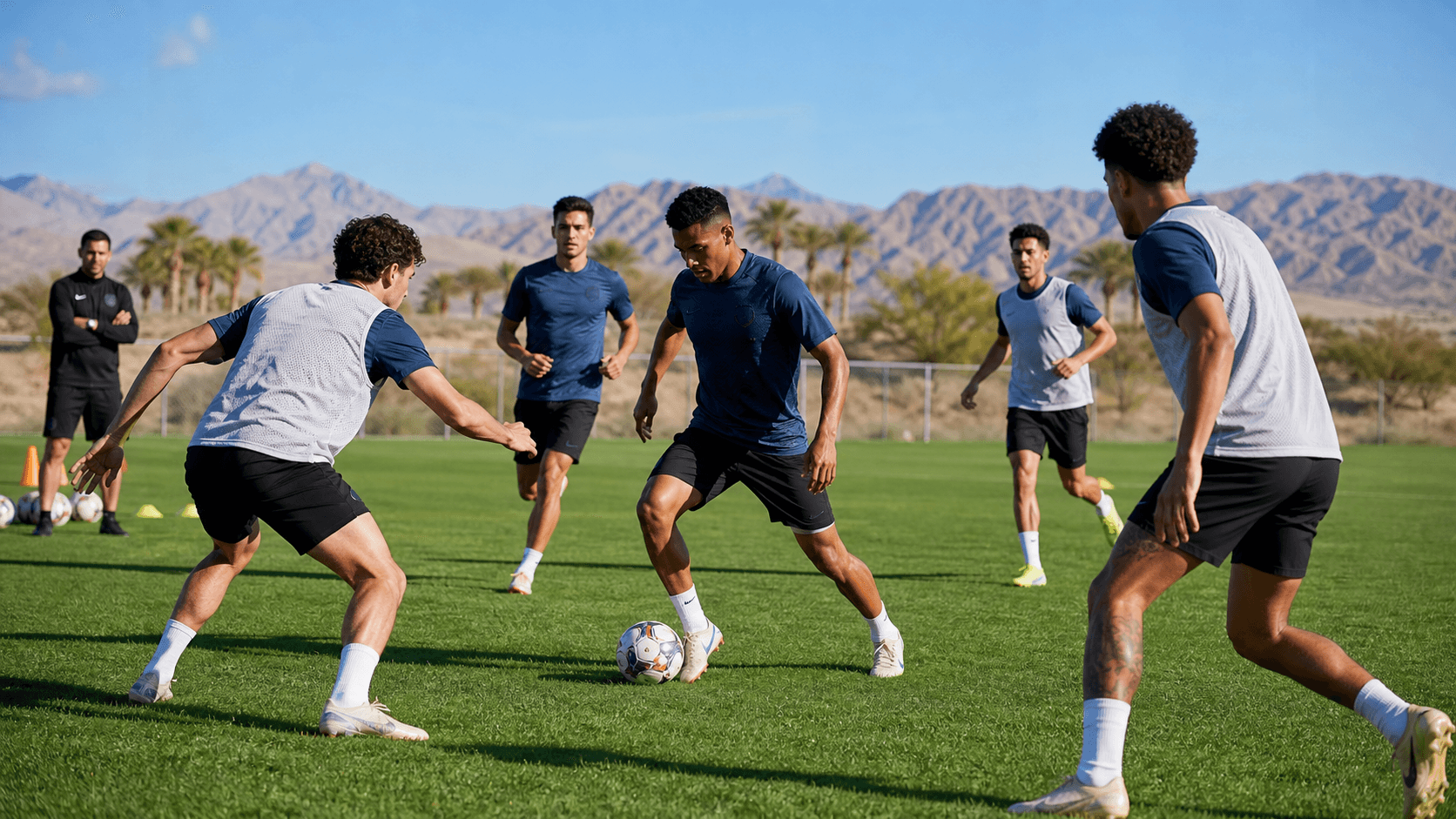
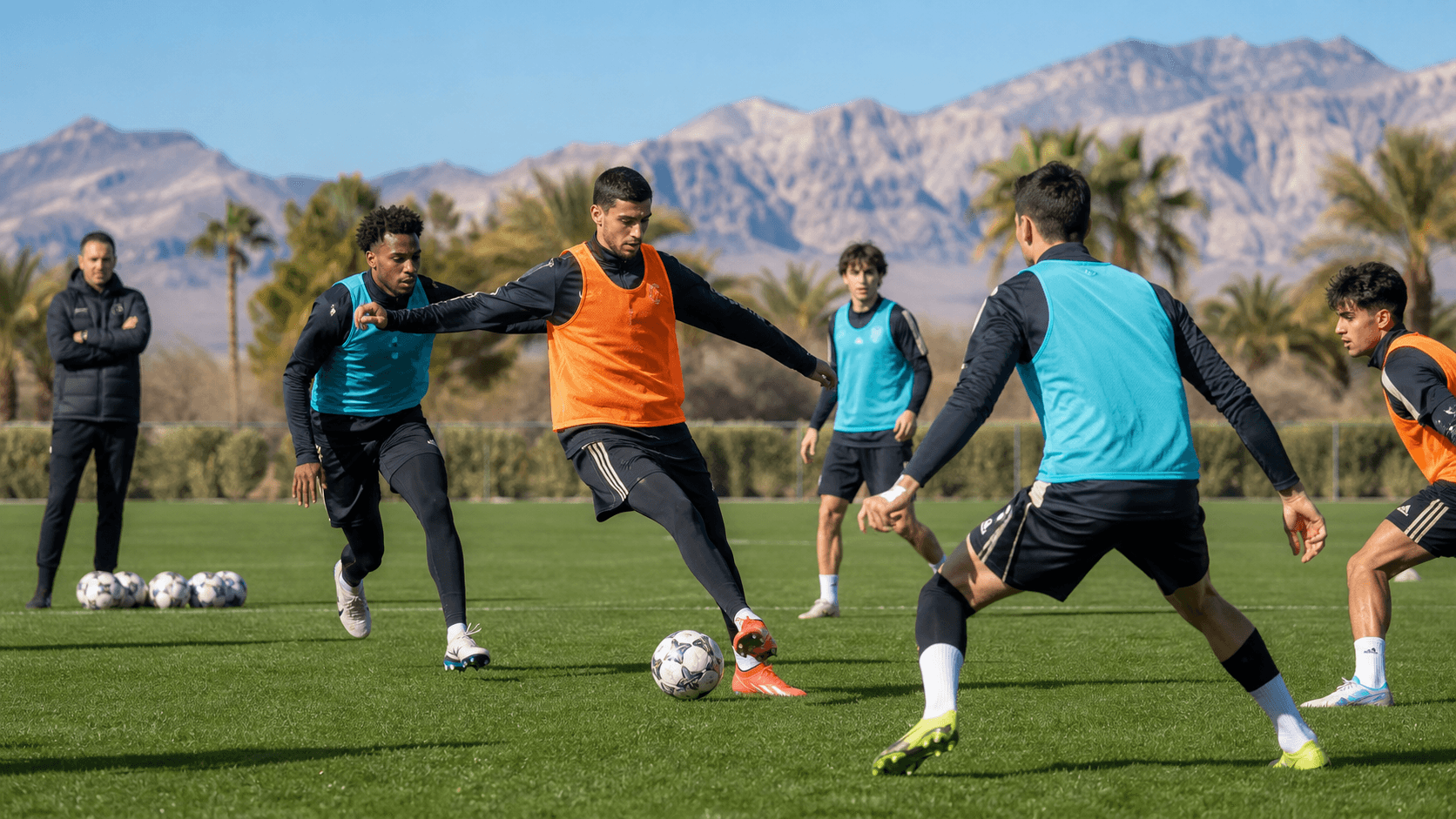
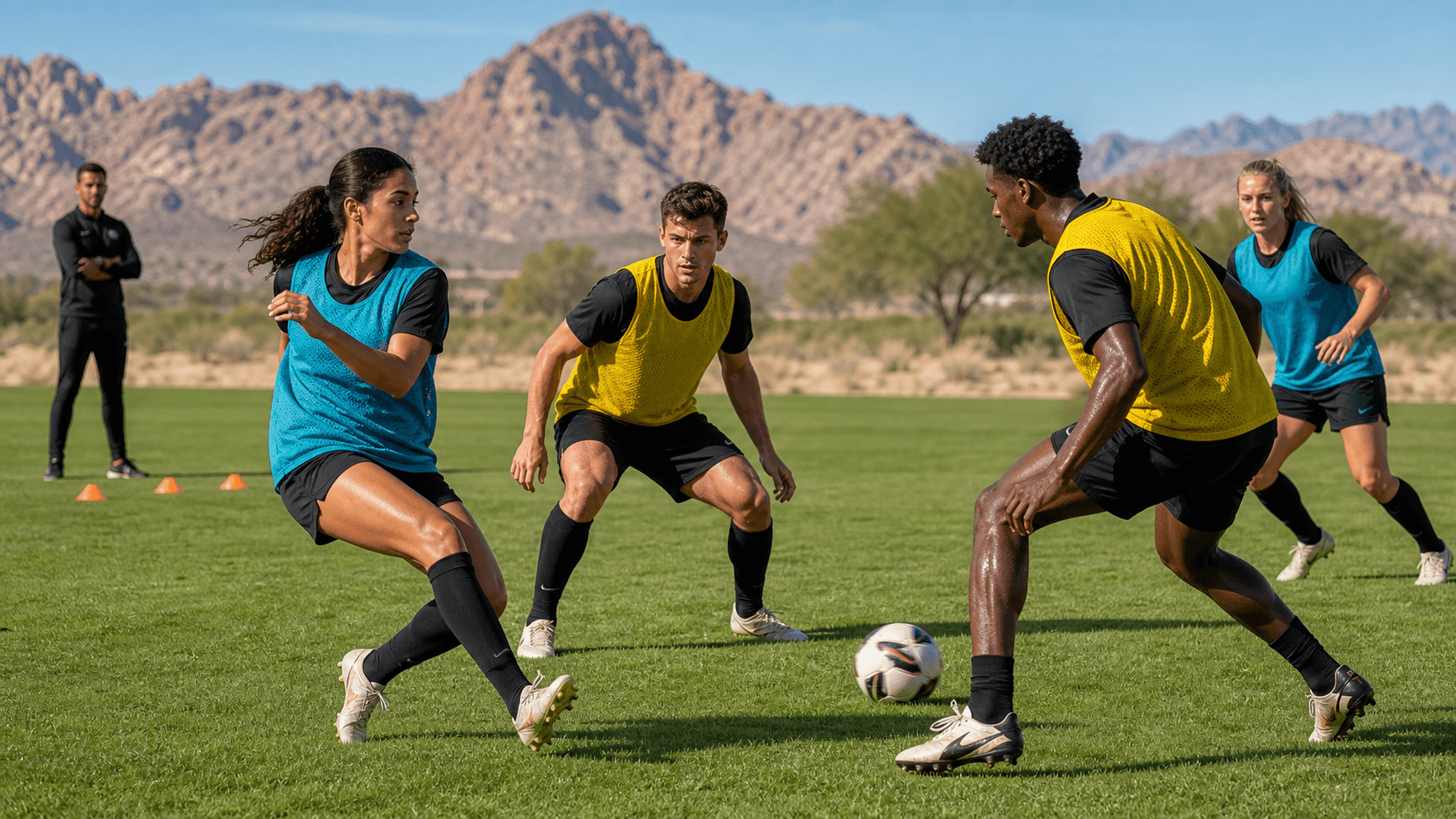
Small-group training creates many of those learning moments. With fewer players involved, each player gets more touches, more repetitions, and more direct feedback. We can work through situations such as 1v1 defending, 2v1 attacks, combination play, transition moments, and finishing when pressure is close.
Mistakes are part of the process. If a player passes into pressure, dribbles into traffic, or reacts late on defense, we can help them think through what they saw and what else was available. Then they return to the activity and try again. That approach builds players who can recover, problem-solve, and keep playing instead of waiting for sideline instructions.
Personal Coaching Supports Each Team Role
Every position asks different questions of a player. A wide player may need more practice receiving in space and delivering a final pass. A central midfielder may need support with scanning before receiving and playing under pressure. Defenders benefit from learning when to step in, cover space, or delay an attack. Forwards need to read movement, timing, and finishing chances.
Individualized coaching helps us meet players where they are. Individual soccer training in Las Vegas is not only for advanced players. Developing players may need support with foundation skills, confidence on the ball, or basic game situations. More experienced players may need quicker decisions, stronger opposition, or position-specific challenges.
Parents can often spot progress in team play through actions that do not always appear on a score sheet. Look for greater composure, more frequent scanning, cleaner first touches, purposeful movement after a pass, better recovery after mistakes, and a stronger willingness to communicate. Those small actions often help the whole team play more smoothly.
Build a Smarter Fall and Winter Plan
October is a useful point in the soccer calendar to assess what a player needs. Rather than waiting for the next tryout or summer break, consider where your child feels limited during matches. Do they need more technical confidence? Do they rush when pressure arrives? Are they unsure where to move without the ball? These questions can guide a thoughtful development plan.
A helpful program should adapt to the player's age, experience, and goals. It should connect skill work to match situations, provide clear feedback, and give players opportunities to apply what they learn. Private coaching, small-group training, clinics, school-break programs, and summer camps can each complement a team schedule when they are chosen with a clear purpose.
The best plan is not simply more training. It is training that helps a player become calmer on the ball, sharper away from it, and more prepared to make the next decision for their teammates.
Build Better Decisions Through Purposeful Training
At Las Vegas Soccer Camps, we help players connect technical ability with the awareness needed to support teammates in realistic game situations. Explore individual soccer training in Las Vegas through our camps and clinics, where coaching is adapted to each player's age, level, and development needs. For guidance on the right program for your player, contact us.