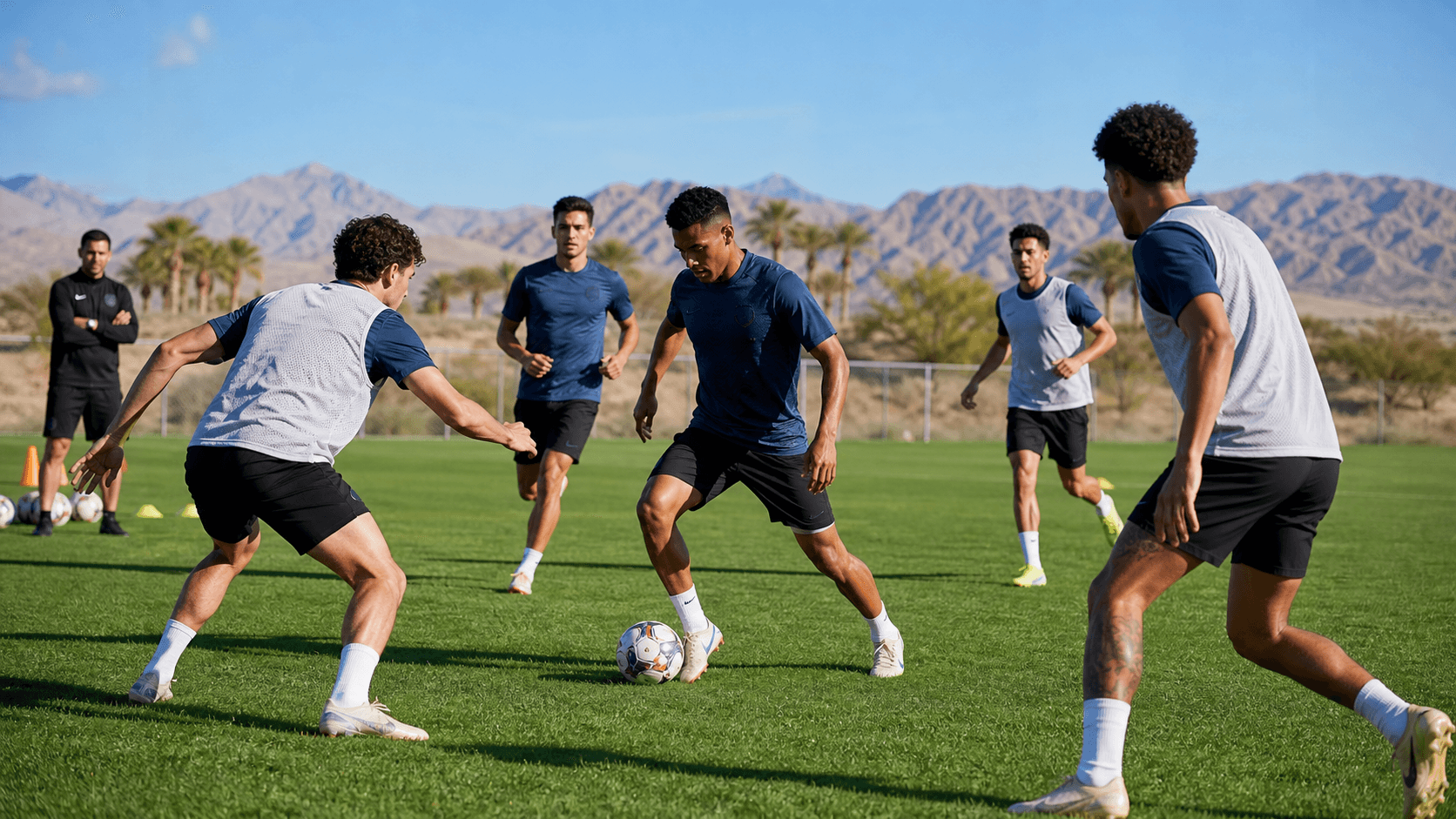
Build Skills and Confidence During Winter Break
A winter break soccer camp in Las Vegas can give young players a useful block of time to focus on development outside the regular school routine. During a busy league season, practices and games can move quickly, leaving less time to slow down, ask questions, and improve the details behind each soccer action.
At Las Vegas Soccer Camps, we believe camp training should be more than keeping players active during a school break. Our European Football Training approach centers on long-term player growth. That means we consider each player's age, experience, ability level, and individual needs instead of putting everyone through the same routine.
A strong camp should help players become more comfortable with the ball, more aware of what is happening around them, and more confident making choices in a game. The goal is not simply to complete a drill correctly. We want players to understand how their training connects to real soccer.
Development usually follows a clear path:
- Technique, learning how to pass, receive, dribble, defend, and finish
- Tactical awareness, noticing space, pressure, teammates, and opponents
- Game application, using skills in realistic situations
- Competition, testing decisions when the game becomes faster and more demanding
When players understand not only how to perform an action, but when and why to use it, their confidence can carry into team practices and match days.
What a Winter Break Soccer Camp in Las Vegas Should Offer
Parents have plenty to consider when choosing a camp. The schedule matters, but the coaching environment matters more. We recommend looking closely at how players are grouped, how coaches teach, and whether training gives children a real chance to use their skills under pressure.
A younger or newer player may need support with coordination, first touch, basic ball control, and understanding simple game ideas. An experienced club player may need faster decision-making, better positional awareness, sharper technical details, and more challenging situations. Neither player should be treated as if they need the exact same session.
When evaluating a winter program, ask about:
- How players are grouped by age, experience, and ability
- Whether coaches give individual feedback during training
- How much time players spend with the ball
- Whether small-group work and game-like play are included
- What players should learn by the end of camp
Technical exercises have a place in player development, but they should lead somewhere. Passing through cones may help introduce a movement pattern, yet soccer asks players to pass while teammates move, opponents apply pressure, and the next decision changes by the second. Purposeful training prepares players for those moments.
We also encourage families to be cautious about programs that make big promises about elite teams, scholarships, or future outcomes. Good coaching explains what it is teaching and why. It gives players useful habits they can keep building over time.
From Technique to Smart Decisions on the Field
Our EFT development sequence starts with technique because players need a reliable foundation. If a player struggles to receive the ball, it becomes harder to look up, notice pressure, and choose a next action. Once technique improves, we can help players read the game with more confidence.
Consider receiving the ball. A player may first learn how to open their body and take a controlled first touch. From there, we can coach them to scan before the pass arrives. They begin to notice whether pressure is coming from behind, whether a teammate is open, and whether it makes sense to protect the ball, play safely, turn forward, or move it quickly.
That learning becomes more meaningful in small-sided games. Fewer players can create more touches, more transitions, and more repeated choices. Players must solve problems instead of waiting for instructions. They learn what happens after they lose the ball, how to react when they win it back, and how to support teammates in tight spaces.
Not every player needs the same thing. Some may need more technical consistency. Others may need help communicating, defending with better awareness, taking smart risks, or staying composed after a mistake. We use realistic match situations to show players where they are improving and what they can work on next.
European Development Ideas That Support Youth Players
European Football Training draws inspiration from respected football cultures around the world. That does not mean copying a professional academy system or pretending one country has a shortcut to success. We study useful development ideas and adapt them to the player in front of us and the local soccer environment in Las Vegas.
Different football cultures are often known for different strengths:
- Spain, possession, awareness, and finding space
- Germany, intensity, quick transitions, and direct reactions
- The Netherlands, positioning, movement, and game intelligence
- Italy, defensive organization and reading danger
- Brazil and Portugal, creativity, technical expression, and confidence on the ball
Croatia and France also provide helpful examples of competitive resilience, versatility, and players who can handle changing game demands. These are not labels we place on young athletes. They are teaching ideas that can help us explain soccer in a clearer, more complete way.
Coach Dani and our EFT philosophy place real value on helping players think about the game. A player should learn to scan before receiving, recognize space, understand pressure, and make purposeful choices. The objective is to build better habits, not to force children into a rigid style of play. Young players need room to be creative while also learning how their decisions affect the team.
How Parents Can Choose the Right Winter Camp
The right camp depends on what your child needs now. A beginner may benefit most from a patient, encouraging setting where they can build comfort with the ball and learn the basics without feeling overwhelmed. A more experienced player may be ready for technical refinement, tactical detail, and competitive game application during the school break.
Before choosing a program, we suggest asking clear questions. Find out how coaches adjust training for different levels, how often players work in realistic games, and whether feedback is personal rather than general. It also helps to ask what the program wants players to understand by the final day.
A development-focused environment can still be enjoyable. Players often gain confidence when expectations are clear, feedback is constructive, and progress is noticed. Training can be challenging without being discouraging. In fact, learning how to respond to mistakes, compete responsibly, and keep trying new ideas is part of becoming a stronger player.
Winter break camps work best as one part of a larger plan. They can complement team training, small-group development, private training, school-break clinics, and future summer camp opportunities. Consistent learning over time gives players more chances to turn new skills into reliable game habits.
Find the Right Winter Break Soccer Camp in Las Vegas
The best winter break soccer camp in Las Vegas should help players return to their teams with stronger technical habits, a clearer understanding of the game, and more confidence in match situations. A camp can be a productive use of the school break when coaching connects ball work to awareness, decision-making, and realistic play.
As you compare options, focus on the setting that fits your child's age, experience, personality, and current goals. The most useful program is one where your player can be challenged, supported, and given meaningful chances to learn how to make smarter choices on the field.
Build Smarter Decisions This Winter
At Las Vegas Soccer Camps, we use school-break training to help players strengthen technique, recognize game situations, and apply their choices with more confidence. Review our winter break soccer camp in Las Vegas options to find a program aligned with your player's stage of development. For guidance on selecting the right fit, contact us and our team will be glad to help.