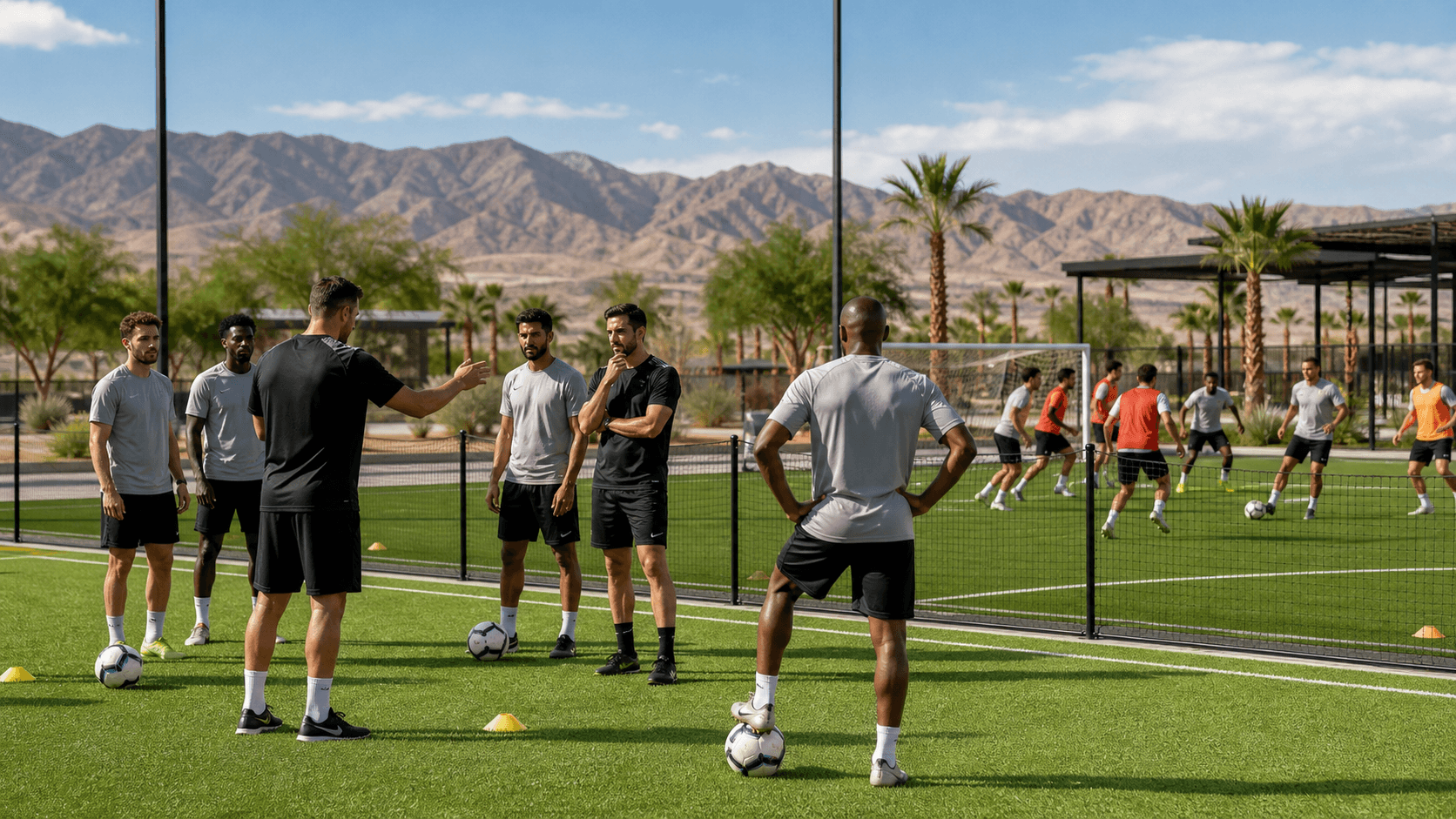
Soccer clinics and camps can both help your child grow as a player, but they are built for different needs. When parents ask us which format is better, we recommend starting with the player, not the label: their age, experience, goals, confidence, and your family's schedule all matter.
A clinic may give a player focused work on one challenge, while a camp can create more time to connect skills to real game situations. The best next step is the one that gives your child purposeful coaching without turning soccer into an overloaded routine.
Choose the Right Format for Your Child's Next Soccer Step
The word "camp" can sound like a big commitment, while "clinic" may sound like a quick add-on. In reality, either format can be valuable when it is planned well. Some camps are broad and recreational, and some soccer clinics in Las Vegas are highly focused on a technical skill or tactical problem.
At Las Vegas Soccer Camps, powered by European Football Training, we look beyond drills and labels. Our development approach follows a clear progression: technique, tactical awareness, game application, and competition. Players should learn how to pass, dribble, receive, defend, and finish, but they also need to understand when and why each action makes sense in a match.
That difference matters. A player who can perform a move in an open line may still struggle to use it when an opponent is closing space. Purposeful coaching helps players take their skills from practice into the game.
Soccer Clinics in Las Vegas Offer Focused Skill Work
Clinics are usually shorter training sessions built around one topic or a few connected parts of the game. They can be a strong fit for a player who needs extra attention with first touch, ball mastery, passing accuracy, finishing, 1v1 defending, speed of play, or decisions in tight spaces.
Focused repetition gives young players time to feel the ball, correct mistakes, and build confidence. Still, repetition should not mean standing in a line and repeating the same action with no pressure. We want players to first understand the technique, then use it while scanning, reacting, and making choices.
A well-planned clinic might help a player work through:
- Receiving the ball with a defender nearby
- Passing with the right weight and timing
- Dribbling into space instead of into pressure
- Defending in a 1v1 situation
- Finishing after a realistic attacking action
Clinics often work well during the school year, before a new season, or during a short school break. They can also be a practical choice when your child wants steady training but your family does not need a longer daily camp schedule.
Camps Create Time for Broader Game Development
Camps give us more time to observe players and build on ideas from one session to the next. Over several days, a player can work on ball mastery, receiving, passing, dribbling, and finishing, then carry those skills into small-sided games where decisions matter.
That progression reflects the player-development ideas we study from international football cultures, including Spain, Germany, Croatia, Italy, France, Portugal, the Netherlands, and Brazil. Each country has its own style, but the shared lesson is simple: players need to become comfortable on the ball, aware of their surroundings, and able to solve problems.
During a quality camp, training should gradually become more game-like. Players may need to scan before receiving, communicate with teammates, recognize pressure, protect the ball, or decide whether to pass, dribble, or shoot. Those moments help soccer make sense beyond a single move or drill.
Not every camp creates that kind of learning environment. We recommend looking for programs where coaches adjust challenges for different ages, levels, and individual needs. A player-development camp should include realistic match situations, thoughtful feedback, and chances to apply what was taught.
Match Training to Age, Readiness, and Family Schedule
Age and experience can help guide your decision. Younger or newer players may benefit from a supportive camp setting that introduces many parts of the game. More experienced players may benefit from a clinic when they want to sharpen a specific skill or tackle a tactical challenge that shows up in matches.
Consider what your child is experiencing right now. If they struggle to receive the ball under pressure, focused technical and small-group work may be helpful. If they have good skills but hesitate during games, they may need activities that build awareness, scanning, confidence, and decision-making.
As September brings back-to-school routines and fall soccer schedules, it can be tempting to add every available session. We encourage families to be selective instead. A clinic can complement team training, while a school-break camp can provide structure when the normal weekly routine changes. The goal is purposeful development, not simply more hours on the field.
Compare Programs Beyond Price and Hours
The name of the program will not tell you everything. Before choosing among soccer clinics in Las Vegas or camps, consider how the coaching is delivered and what players are asked to do with the ball.
Helpful questions include:
- Do coaches explain the purpose behind each activity?
- Do players receive useful feedback during training?
- Does the session include pressure, movement, and game decisions?
- Are activities adjusted for different ages and ability levels?
- Do players get opportunities to apply skills in realistic play?
Some players also benefit from a smaller setting. Small-group training can provide more individual attention while still allowing players to work with teammates and opponents. Private training may be appropriate when a player needs extra technical repetition, targeted coaching, or support building confidence.
The strongest programs do not treat children like they all need the same drill. They recognize that development is personal. A confident dribbler may need help seeing the next pass. A hard-working defender may need more comfort receiving the ball. Good coaching notices those details and connects them back to the game.
Find the Training Environment That Fits Your Player
Camps and clinics are not competing choices. A player may use a clinic to improve a focused skill, attend a camp for broader development, and use small-group or private training when more individual attention makes sense. Each format can have a place at different points in a player's growth.
Choose the setting that helps your child enjoy soccer while learning to make better decisions. The right next step should build technical quality, game understanding, confidence, and the ability to solve problems when the match becomes fast and unpredictable.
Find Training That Fits Your Child
Review our soccer clinics in Las Vegas to find a program suited to your child's age, experience, and current development needs. At Las Vegas Soccer Camps, we use small-group coaching and realistic game situations to help players connect technique with smarter decisions. If you would like guidance on the right option, contact us and our team will help you identify an appropriate next step.